
How to Prevent Blisters From Heels (and Treat Them)
Blisters from heels are caused by friction and pressure — your skin rubbing against the shoe as your foot slips with each step. To prevent them, eliminate the rub: get a snug (not tight) fit, stop heel slippage, protect known hot spots, and choose cushioned shoes with a roomy toe box. Most heel blisters are a fit-and-friction problem — not an unavoidable price of wearing heels.
Why heels give you blisters
Three things combine to make a blister: friction (skin rubbing the shoe), pressure (weight concentrated on a small area), and moisture (sweat softens skin so it tears more easily). Ill-fitting heels make all three worse — too much room at the heel lets it slip and rub, too little room crams the toes, and a steep pitch loads the ball of the foot. The more you walk or stand, the more the friction adds up.
How to prevent blisters from heels
Run through this checklist before a long day or event:
- Get the fit right. Your heel should sit snug with minimal slip, and your toes should have room to lie flat. Not sure of your size? Find your fit →
- Stop the slip. Heel slippage is the leading cause of back-of-heel blisters — the right size, a secured strap, or a heel grip keeps your foot from sawing up and down.
- Protect hot spots in advance. Pre-tape known rub points, use an anti-friction balm, or apply a blister plaster before the rubbing starts.
- Keep feet dry. A little foot powder or antiperspirant cuts moisture, which cuts friction.
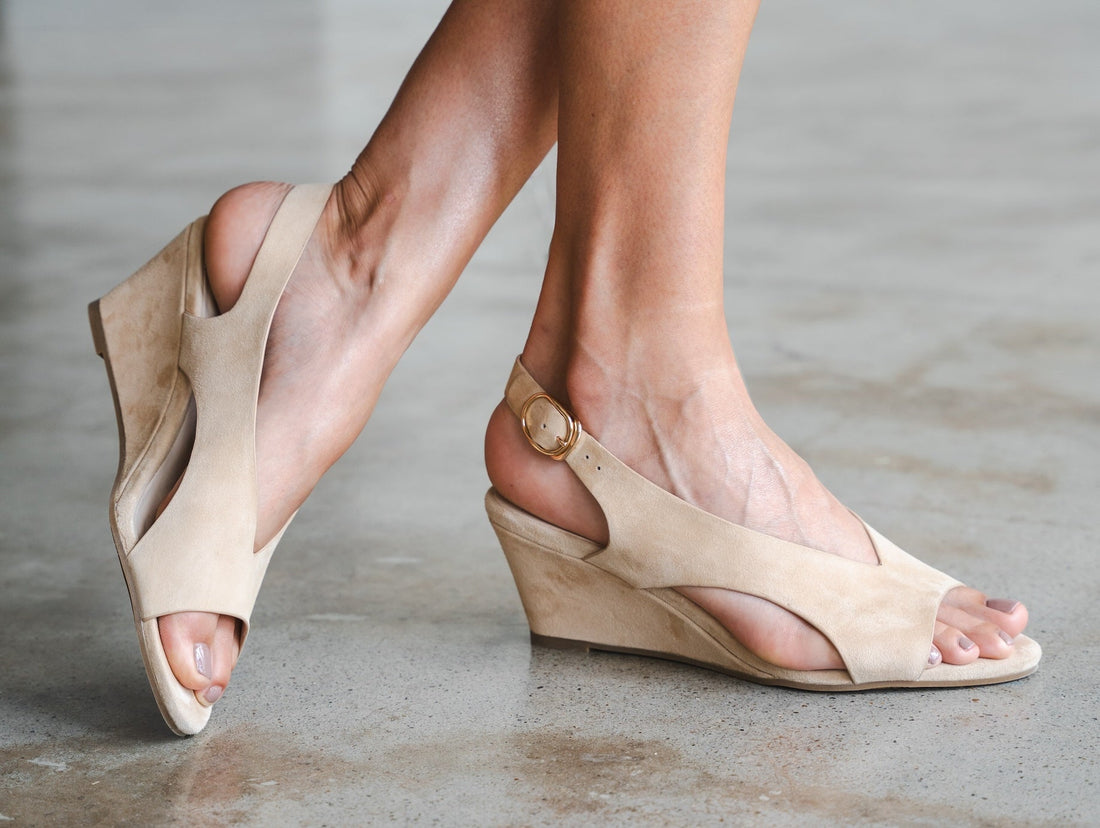
- Choose a gentler angle. Wedges have a gentler incline than stilettos, leaving more room for your toes and less pressure up front.
- Break new shoes in gradually, and on very long days, bring a backup pair to give your feet a break.
Where the blister forms — and what it's telling you
- Back of the heel: your heel is slipping — size down slightly, add a heel grip, or secure the strap.
- Toes and pinky toe: the toe box is too narrow or short — you need more room up front.
- Ball of the foot: pressure and pounding — you need cushioning and a lower, balanced heel.
How to treat a blister you already have
For a small, intact blister, leave it unpopped — the skin is acting as a sterile bandage — and cover it with a cushioned plaster. For a larger or open one, clean it gently, protect it, and keep it dry. Over-the-counter dressings, insoles, and powders can help; see a professional if it's very painful or shows signs of infection (spreading redness, warmth, or pus).
The real fix: shoes that don't rub in the first place
You shouldn't have to tape your feet to wear heels. Steffie's was designed by a neuroscientist to remove the causes of blisters at the source: a calibrated two-inch heel that keeps your weight balanced, RoamFoam™ cushioning that absorbs impact, a secure quick-release strap that stops heel slip, and a toe box with room to breathe. See what makes a heel comfortable, or explore comfortable wedges built for all-day wear.
Not sure which size will fit without slipping? Find your fit in three quick questions, or email help@steffies.us.